
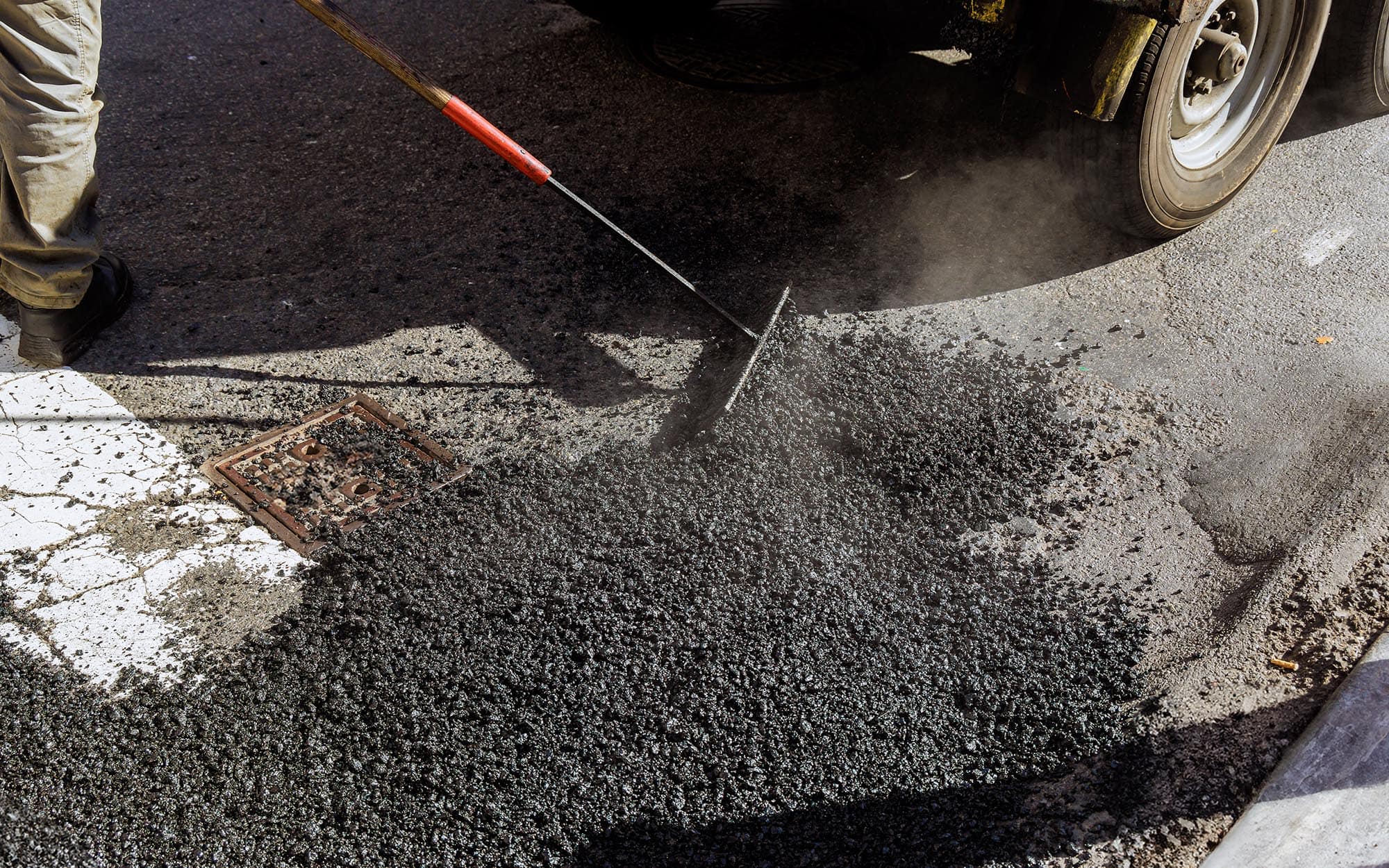
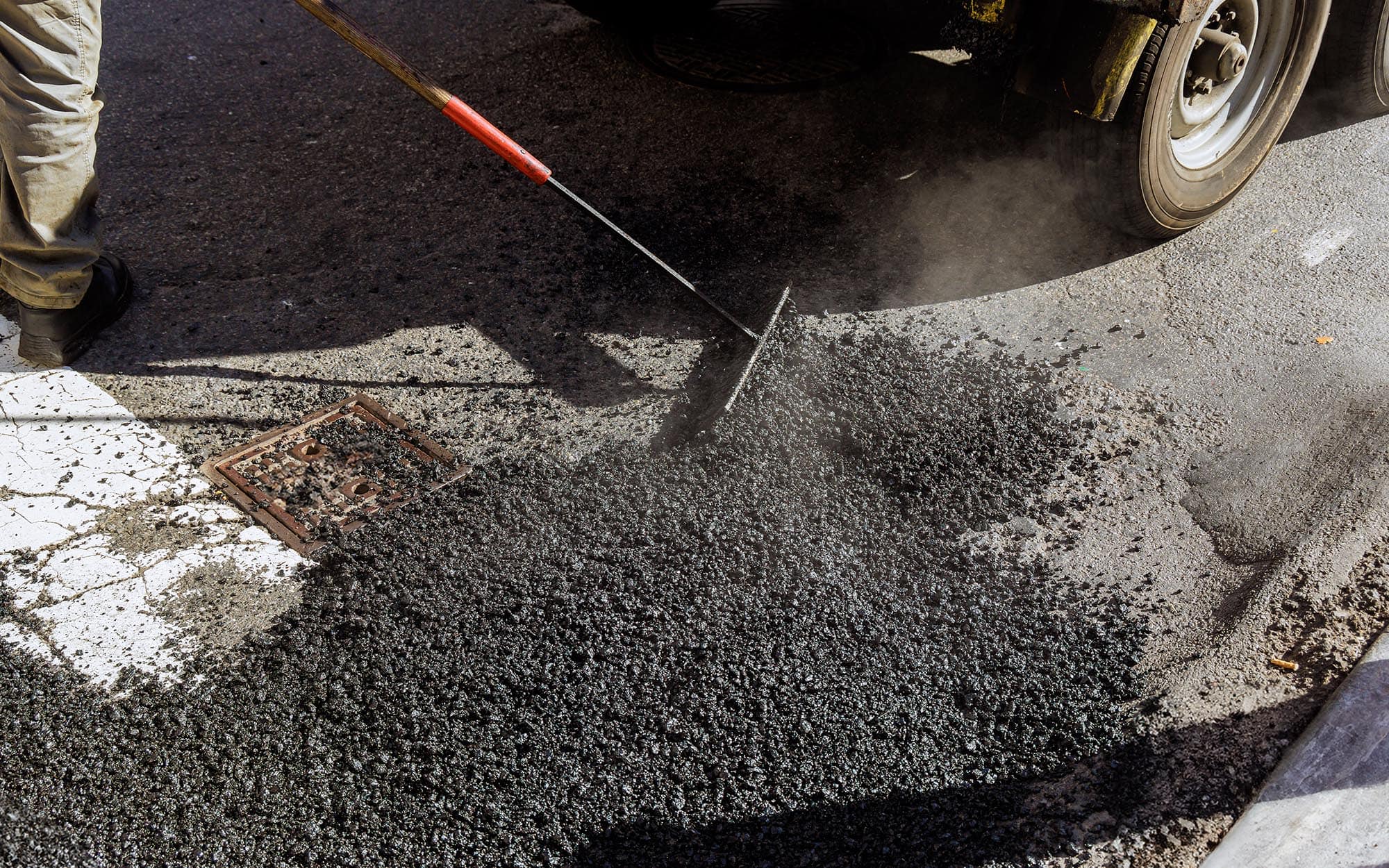
 From scorching summers to icy winters, weather decides how well a resurfaced surface cures and how long it stays smooth. Fortunately, planning around the forecast can protect your investment and save future repair costs.
Learn more about the connection between asphalt resurfacing and weather here:
The Connection Between Resurfacing and Weather
Every asphalt resurfacing project has three key stages: placement, compaction, and curing. Weather shapes each one.
- Placement – Asphalt is delivered hot so it can level out before cooling. If outdoor temperatures are too low, the mix stiffens fast, making it hard to spread evenly.
- Compaction – Crews roll the surface to push out air and lock particles together. Warm, pliable asphalt compacts easily; cold, brittle material does not.
- Curing – After the rollers leave, asphalt keeps “setting” for days. Moisture, shade, or rapid temperature swings slow the chemical process that bonds the new layer in place.
When conditions aren’t right, the pavement may look fine at first but develop ruts, cracks, or potholes well before its time. You’re essentially betting against the weather, and the house often wins.
Extreme Heat: Fast Cures and Hidden Hazards
Warm weather is generally a friend to asphalt, yet triple-digit days add their own challenges.
Upsides of Summer Heat
- Longer Workability Window – High temps keep the mix supple, giving crews ample time to spread and compact it.
- Quick Turnaround – Hot surfaces cure faster, so driveways or parking lots reopen sooner.
- Tighter Bonds – Heat helps the binder coat every stone, producing a dense, durable mat.
Watch-Outs When the Mercury Spikes
- Surface Scuffing – Fresh pavement can get soft under extreme heat, leaving tire marks or footprints.
- Oil Bleed – Bitumen can rise to the top, creating a slippery sheen that shortens pavement life.
- Worker Safety – Crews may need extra breaks or nighttime shifts, which can limit project hours.
Protective tips: Schedule early-morning pours, keep vehicles off the surface for at least 24 hours, and use light sand or quick-set sealers if extremely hot days follow completion.
Cold Weather: Can You Resurface in Winter?
Technically, yes—but expect more hurdles than hoopla.
- Temperature Thresholds – Most contractors draw the line near 50 °F (10 °C). Below that, the mix cools too quickly to bond well.
- Limited Daylight – Shorter winter days shorten job windows. Work that drags into dusk risks uneven compaction and cold seams.
- Moisture Hazards – Frost, snow, or even dew can trap water between layers, leading to early delamination.
Crews can sometimes use heated tents or additives to lower workable temperatures, but costs rise quickly, and warranties often shrink. If the project isn’t urgent—say, a private driveway rather than a critical roadway—waiting for spring is the smarter call.
Rain and Humidity: Moisture’s Effect on Fresh Asphalt
Water is asphalt’s number-one enemy during curing.
- Scheduling Delays – Heavy rain can wash away tack coat, halt equipment, and saturate the base.
- Weakened Bonding – Even light drizzle cools the mix and dilutes the binder on the pavement’s underside.
- Surface Blemishes – Raindrops hitting hot asphalt leave shallow pits that collect dirt and water later on.
High humidity alone won’t ruin a project, but it slows evaporation. Crews need extra drying time, which can push completion out by a day or more.
What if a surprise shower hits?
Workers may pause rolling if rainfall is light and resume once the surface steams off. A downpour often means cutting, removing, and replacing the compromised area—an avoidable expense with a close eye on the forecast.
Freeze-Thaw Cycles: The Silent Asphalt Killer
Regions that bounce between freezing nights and sunny afternoons know this pain well. Moisture slips into the pavement’s pores, freezes, expands, and pops tiny cracks wider each time. Those hairline fractures soon invite more water—and the cycle continues.
Timing resurfacing ahead of winter helps seal out precipitation before it can infiltrate. If resurfacing must wait until fall, add a quick-dry sealcoat or crack filler before the first frost to buy precious months of protection.
The Best Seasons for Asphalt Work: Spring vs. Summer
Most property owners schedule resurfacing between March and September, yet each season has perks.
Spring: Moderate temps for steady curing, crews are less booked, ideal for repairing winter damage. Rain showers may cause brief delays; mornings can still be cool
Summer: Long, dry days speed up compaction and opening to traffic, with minimal risk of freeze-thaw. Peak demand can tighten schedules; extreme heat needs extra surface care
Regional Considerations
- Humid South – Afternoon thunderstorms pop up quickly; morning starts are vital.
- Dry Southwest – Rapid evaporation helps curing, but extreme heat may require a light surface dusting to prevent scuffing.
- Cold Midwest – Spring’s thaw can leave bases soggy; late spring to early summer is often safest.
Booking four to six weeks in advance lets you grab the best dates and gives you time to shift if the forecast turns. In general, seasonal asphalt resurfacing and scheduling resurfacing with weather in mind is a good plan.
Need resurfacing done right the first time? Explore our asphalt resurfacing services to secure a spot when weather conditions are at their best. Don’t wait—prime dates fill up fast.
Protecting Your Investment Year-Round
Resurfacing is step one; upkeep keeps the surface strong.
- Sealcoat on Schedule – A protective seal every two to three years shields against UV rays and water intrusion.
- Quick Crack Fixes – Repair hairline cracks before they widen. Hot-pour crack sealant is cheaper than patching.
- Prompt Drainage Checks – Clear gutters, downspouts, and nearby soil to steer water away from the pavement edge.
- Weight Management – Heavy trucks parked in the same spot can rut soft summer asphalt. Rotate parking areas when possible.
- Seasonal Sweepings – Remove leaves, salt, and debris that trap moisture or encourage surface breakdown.
Regular attention may feel small, but it adds years to pavement life and keeps big repairs off your calendar.
Quick Resurfacing Weather-Readiness Checklist
Use this five-step prep list before the crew rolls up:
- Confirm the Extended Forecast – Look for at least two consecutive dry, mild days.
- Clear the Work Area – Remove vehicles, plan alternate parking, and post signs if it’s a shared space.
- Check Drainage – Ensure nearby downspouts and curbs won’t funnel water onto fresh asphalt.
- Communicate With Neighbors or Tenants – Give everyone a heads-up so foot and vehicle traffic stays off the surface.
- Plan Post-Project Care – Keep heavy loads off for 24 hours, avoid sharp turns, and postpone sealcoating until the asphalt fully cures (usually 90 days).
A little foresight keeps surprises to a minimum and the finish line in sight.
Let’s Kick Off Your Resurfacing Project
Ready to time your resurfacing project for maximum asphalt durability and minimal hassle?
Reach out to the asphalt experts at Phillips Paving today. We’ll review your local climate, recommend the perfect project window, and handle every detail—from prep work to final sealcoat—so you get a surface built to outlast every season. Let’s protect your pavement and your budget, starting now.